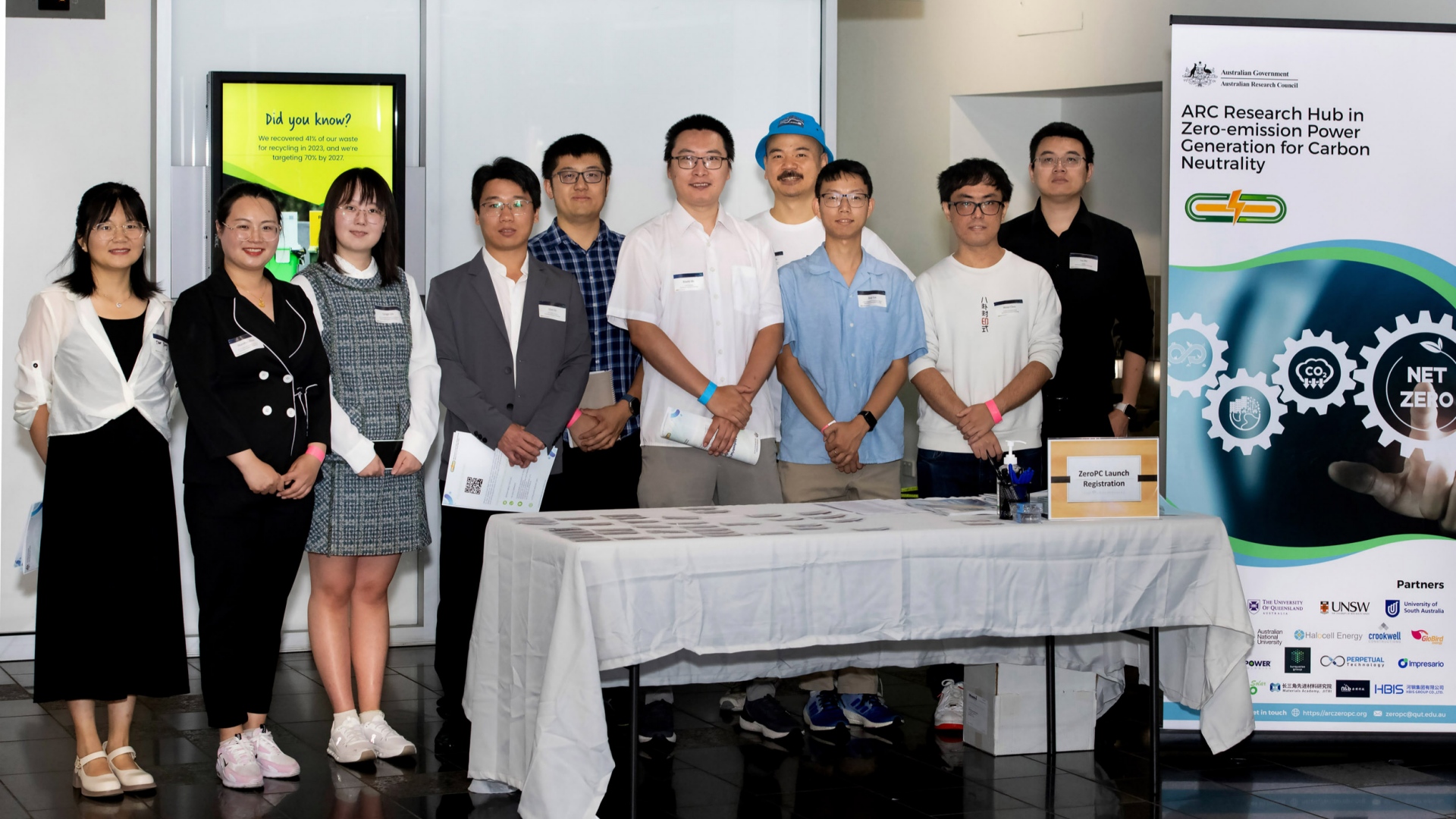
International review positions QUT and the ARC ZeroPC Hub at the forefront of sustainable thermoelectric technologies
Researchers from the ARC Research Hub in Zero-emission Power Generation for Carbon Neutrality (ZeroPC Hub) at the Queensland University of Technology (QUT) have published a landmark review in Materials Science & Engineering R, one of the world’s highest-impact review journals in materials science. The comprehensive article provides the most up-to-date roadmap for developing next-generation thermoelectric materials and devices capable of converting waste heat into electricity and enabling environmentally friendly solid-state cooling.
The review, led by Professor Zhigang Chen and colleagues, brings together the latest advances in near-room-temperature thermoelectric materials, identifies the remaining scientific and engineering challenges, and outlines future research directions that could transform cooling technologies, wearable electronics, artificial intelligence infrastructure, and distributed energy systems.
Towards a zero-emission cooling future
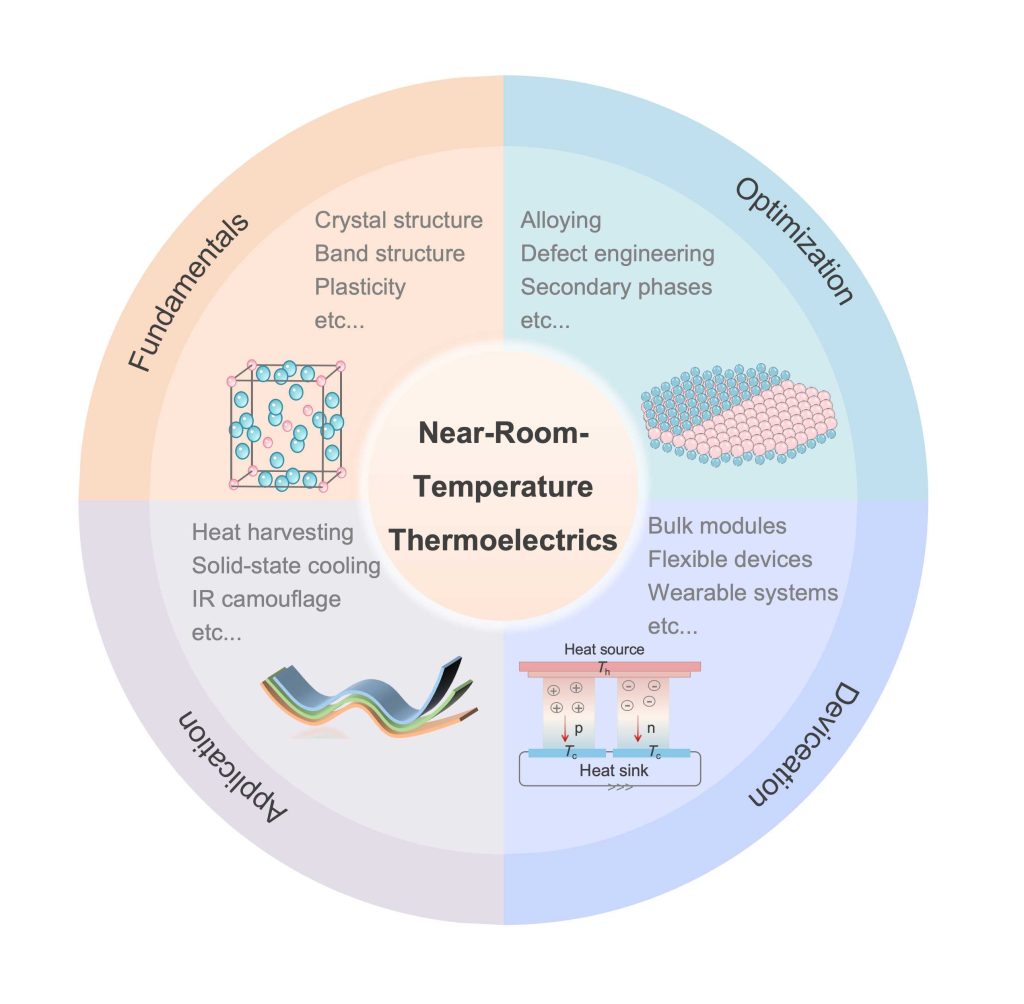
Cooling technologies currently account for a significant proportion of global electricity consumption and commonly rely on refrigerants with high global warming potential. Thermoelectric technology offers an attractive alternative by directly converting heat into electricity—or electricity into cooling—using solid-state materials without moving parts, refrigerants or compressors.
Professor Chen said the technology could play an increasingly important role in achieving global carbon-neutrality goals.
“As the world moves towards artificial intelligence, advanced electronics and electrification, thermal management has become one of the biggest technological challenges.”
“Thermoelectric technology provides an elegant solution because it enables both waste-heat recovery and solid-state cooling using environmentally friendly materials with exceptional reliability.”
“This review highlights how the field has evolved from improving individual materials to developing integrated systems capable of delivering practical solutions for energy efficiency and zero-emission cooling.”
A roadmap for the next decade
The review analyses the three major families of high-performance near-room-temperature thermoelectric materials:
• Bi₂Te₃-based alloys, the benchmark materials for room-temperature applications;
• Ag-based superionic conductors, offering high flexibility and exceptional electrical transport; and
• Mg-based thermoelectric materials, which combine high performance with abundant, environmentally friendly elements.
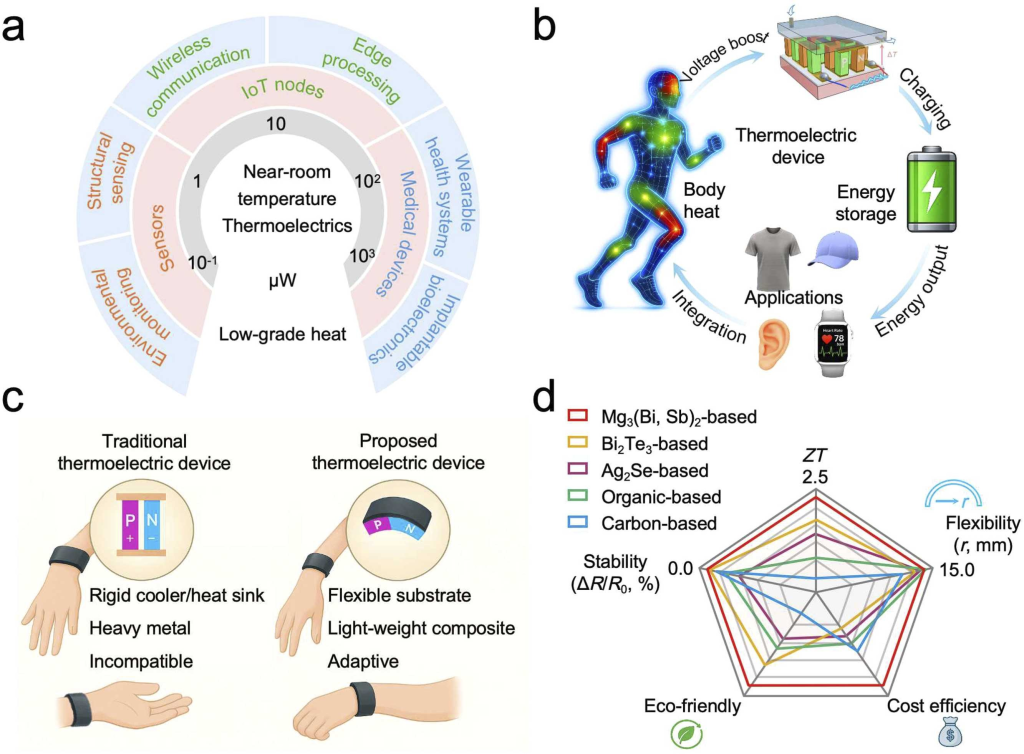
Beyond materials, the authors examine flexible thermoelectric devices, thin-film technologies and scalable manufacturing approaches suitable for wearable electronics, Internet-of-Things sensors, biomedical devices, precision electronics cooling and next-generation microelectronics.
Importantly, the review goes beyond summarising recent research by identifying the underlying physical mechanisms governing thermoelectric performance and proposing future strategies that integrate materials discovery, theoretical modelling, advanced manufacturing and device engineering into a unified framework.
Supporting Australia’s clean-energy future
The publication reflects the research vision of the ARC Research Hub in Zero-emission Power Generation for Carbon Neutrality (ZeroPC Hub), Australia’s national research hub dedicated to developing next-generation thermoelectric technologies.
The Hub brings together researchers from six Australian universities and thirteen industry partners to accelerate the translation of advanced materials into real-world technologies for renewable energy, waste-heat recovery and sustainable thermal management.
Professor Chen said interdisciplinary collaboration would be essential to commercialising thermoelectric technologies.
“Scientific breakthroughs alone are not enough. To create real impact, we need to combine fundamental materials research with advanced manufacturing, device engineering and industry collaboration.”
“Through the ARC ZeroPC Hub, we are building Australia’s capability in this strategically important area while training the next generation of researchers and engineers.”
International recognition of Australian research leadership
Materials Science & Engineering R is internationally recognised as one of the leading review journals in materials science, publishing authoritative reviews that shape future research directions across the discipline.
The publication highlights QUT’s growing international leadership in thermoelectric energy conversion and solid-state thermal management and reinforces Australia’s position as an important contributor to clean-energy innovation.
The review is expected to become an important reference for researchers working across materials science, energy conversion, electronics cooling, wearable technologies, renewable energy and advanced manufacturing.
Publication
Inorganic Thermoelectrics for Ambient-Condition Energy Conversion: Advances, Challenges, and Perspectives
Journal: Materials Science & Engineering R (Elsevier)
Authors: Tao Yang, Xiao-Lei Shi, Nan-Hai Li, Meng Li, Jennifer MacLeod, Lan Li and Zhigang Chen
Website:
Inorganic thermoelectrics for ambient-condition energy conversion: Advances, challenges, and perspectives – ScienceDirect
Accepted: 29 June 2026
Available online: 7 July 2026
About the ARC ZeroPC Hub
The ARC Research Hub in Zero-emission Power Generation for Carbon Neutrality (ZeroPC Hub) is led by Queensland University of Technology (QUT) and brings together six Australian universities and thirteen industry partners to develop next-generation thermoelectric technologies for zero-emission power generation and solid-state cooling. The Hub aims to accelerate Australia’s transition to net zero by advancing innovative materials, scalable manufacturing and industry-ready energy technologies while training future research leaders.